"Whatever Happened to AIDS?"
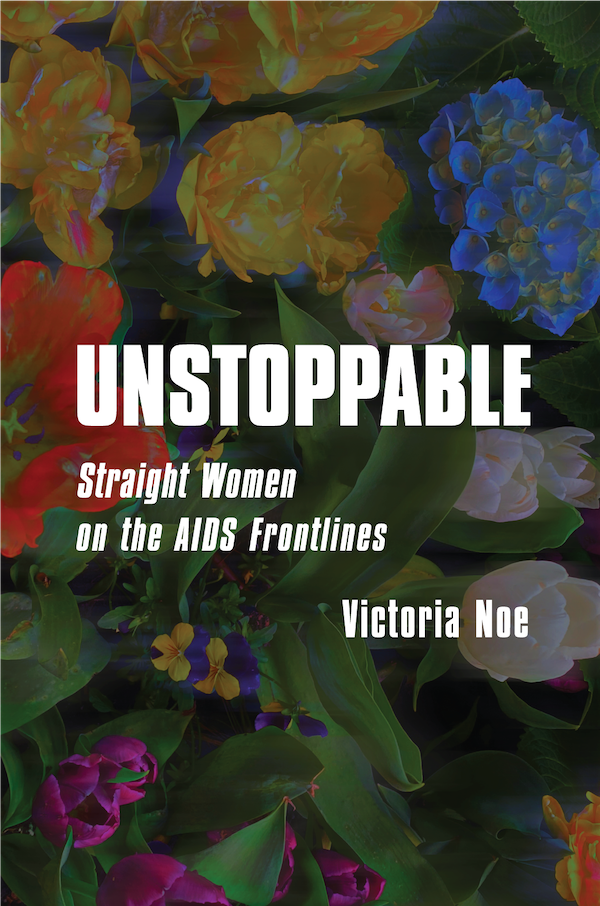
 In 2017, I was one of the authors at an event held at the Princeton, IL (2022 population: 7,721) public library, showcasing writers in a variety of genres. Part of my series about people grieving their friends includes a book on grieving friends lost to AIDS. One man, probably in his 40s, tapped the book cover and asked, “Whatever happened to AIDS? You never hear about it anymore.” And while that continues to be a very common sentiment, the timing of his question was interesting.
What he didn’t know was that I’d already spoken to a nurse who worked with HIV patients in that community. Then, an older man, distraught that his best friend had stopped taking his HIV meds and recently died. And I had a good discussion with that man who asked the question, mostly about the lack of public awareness since 1996, when the antiretroviral drug ‘cocktail’ proved to be a lifesaver.
HIV was very present in his small community. But he had no idea.
People of a certain age have dramatic memories of the early days of HIV and AIDS: emaciated young white gay men; celebrities like Rock Hudson who died from AIDS; fundraisers headlined by Elizabeth Taylor; rampant misinformation and panic. That is how they think of the virus: a moment frozen in the 1980s and early 1990s. A crisis that must have ended, because it’s not visible anymore.
Except it didn’t.
Advances in HIV/AIDS care and testing have had an unintended consequence: the urgency is gone. People were no longer dying horrible deaths. And because we don’t see them on the news, the virus itself is out of sight, out of mind, replaced by COVID or some other threat. New cases are slowly going down, but there are still almost 32,000 new cases of HIV diagnosed in the US each year. What’s different is that the face of HIV is no longer a young white gay man living in New York City or San Francisco. It’s overwhelmingly people of color, including women. Most are over the age of fifty. And now, over half of new cases come from just nine states in the South.
So what, right?
HIV is all around us, in rural communities where hospitals have been closed and Medicaid expansion denied, and in big cities where services are more accessible - if you’re white and have good health insurance. Eliminating sex education classes and banning books won’t make HIV go away. It just means that of the 1.2 million people in the US who are living with HIV, 13% don’t know it.
In Penobscot County, Maine, home to Bangor (2024 population: 32,446), 28 new HIV cases have been reported in less than two years, seven times the expected number. The increase is directly attributable to cutbacks in services to homeless people using injection drugs. This isn’t old news. It’s happening now.
The destruction wrought by the Trump administration’s draconian cuts to wildly successful programs like USAIDS, which administers George W. Bush’s signature PEPFAR (President’s Emergency Plan for AIDS Relief) have already resulted in over 600,000 deaths in Africa, many of them children. Gutting HIV-related clinical trials and research at the CDC has doomed what Donald Trump committed to in his first term - ending the epidemic by 2030. What was once attainable is now unlikely.
But if you’re not living with HIV, why should you care? Because people living with that virus are no different than people living with diabetes, COPD, or other chronic diseases. The issues they face are the same that millions of other people who are not living with HIV face every day: treatment access and affordability, housing and food insecurity, endless bureaucratic red tape.
Monday, Dec. 1, is World AIDS Day, a day of remembrance and renewed commitment. HIV is a stubborn virus that defies the efforts of our best scientists (including the ones who transferred their experiences in HIV work to create COVID vaccines with breathtaking speed). But it can be almost completely eradicated with clear, accurate information that is easily available to everyone. Because only then can we push past the stigma and end the epidemic once and for all.
And then my answer to that man’s question will be “We defeated it.”

 Follow on BookBub
Follow on Amazon
Follow on YouTube
Follow on BookBub
Follow on Amazon
Follow on YouTube